



















Arctic Animals: The Wildlife At The Top Of The World

Some people might have the mistaken impression that the Arctic is a barren wasteland. Well, there are certainly barren-grounds—a term sometimes used to describe treeless tundra and polar desert, especially in Arctic Canada—but the Arctic is far from lifeless.
Indeed, one of the main draws of an Arctic cruise is the potential of seeing wildlife: some of the most spectacular wildlife—and wildlife congregations—on the planet, in fact.
We have a host of articles devoted to particular Arctic species and groups of animals. In this guide, we’ll sketch out the big picture of the polar menagerie, and give you some practical information for choosing the Arctic cruise itineraries that maximize your chances of seeing critters of interest.

In the silent, frozen expanse of the North, the Arctic wolf stands as a symbol of resilience and untamed beauty. Witnessing these magnificent predators in their natural habitat is a powerful reminder of the wild spirit of the Arctic.
Animals in the Arctic: A Sweeping Overview
Arctic animals encompass everything from insects and marine crustaceans to hulking polar bears, walruses, and whales: a splendid diversity belying the apparent harshness of this high-latitude realm.
To consider Arctic animals in their proper context, it’s important to understand some of the basic building-blocks of the Arctic environment. The dramatic fluctuations in daylength, temperature, snowcover, and sea-ice extent that define the Arctic establish some of the most fundamental conditions for animal life up here. Many Arctic animals are only seasonal visitors, arriving with the onset of spring and early summer to take advantage of the around-the-clock sunlight and the primary productivity (and warmth) it fuels. But other species are year-round inhabitants, toughing it out—heck, even thriving—over the long, dark, brutally cold winter.
As compared to lower latitudes, the ecosystem mosaic of the Arctic is relatively simplified, with much of the region dominated by various forms of tundra, including that extreme variety, exceptionally dry and cold, known as a polar desert. The Arctic Circle encompasses peripheral extensions of the vast boreal forest, or taiga, which dominates southward, with the forest-tundra ecotone (ecological border) creating a vast, circumpolar threshold. Rivers, lakes, and ponds serve as freshwater habitats. Permanent ice, from ice sheets, icecaps, and cirque glaciers to the seasonal and multi-year sea ice of the Arctic Ocean, creates its own extensive ecosystem. And speaking of the ocean, it of course has its own spectrum of habitats established by such physical characteristics as currents, upwellings, depth, salinity, and seafloor contours—not to mention patterns of sea-ice cover.
(Interested in Arctic plantlife, another crucial component of the polar ecosystem? We’ve got you covered.)
Resting atop shifting ice, the walrus is a testament to the specialized adaptations required to thrive in the far north. Observing these massive pinnipeds in their icy domain offers a rare glimpse into the complex rhythm of Arctic life.
The “Big 5” of Arctic Wildlife
Inspired by the longstanding categorization of much-sought (by both hunters and safarigoers) African mammals, tourism promoters sometimes speak of the “Big 5” Arctic species many travelers are keenest on seeing. We’re talking about the polar bear, the muskoxen, the walrus, the beluga whale, and the narwhal.
Five spectacular beasts, to be sure, but far from the only wonderful creatures worth “glassing” for on an Arctic cruise. The following sections will attempt to convey something of the faunal diversity to be appreciated at the top of the world—the Big 5, of course, very much included!
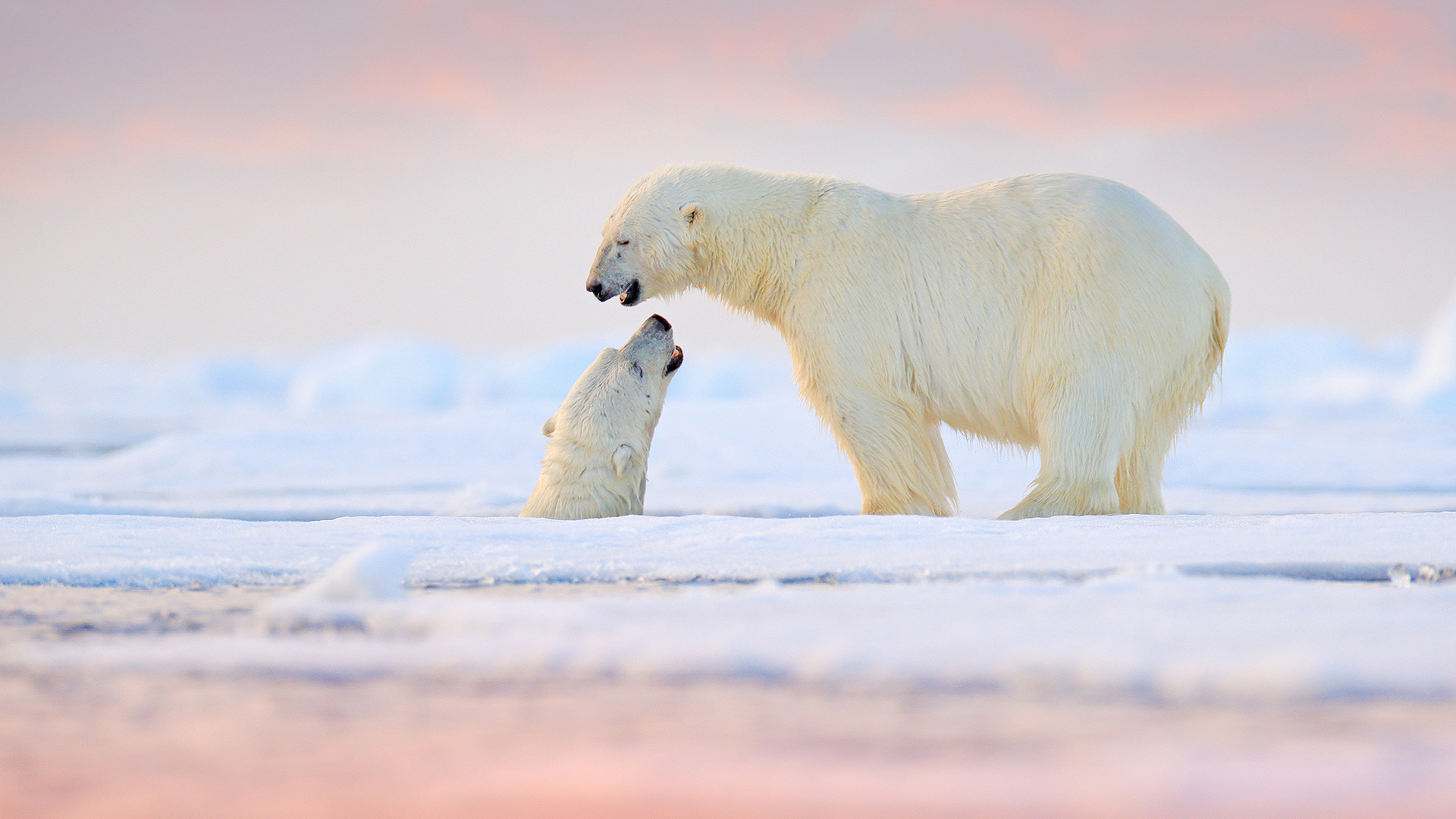
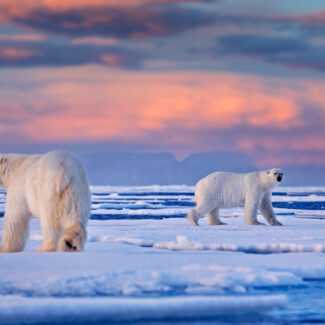
As the undisputed icon of the North, the polar bear perfectly embodies the quiet power and vulnerability of the Arctic. Encountering these majestic kings of the ice is a highlight for any traveler exploring the top of the world.
Arctic Land Animals
Among the littlest inhabitants of the Arctic’s terrestrial environments are arthropods, including spiders (such as the Arctic wolf spider), mites, and a whole host of insects. Those encompass everything from essential pollinators of tundra wildflowers—among them many species of bumblebees and other bees as well as butterflies such as tortoiseshells, fritillaries, and skippers—to the various biting insects, including mosquitoes, midges, and blackflies, which can be such a misery on the summer tundra.
Only a small handful of reptiles and amphibians can be found above the Arctic Circle. The hardy reptiles include the common adder, the Arctic’s only snake, and the viviparous lizard; the Siberian and North American wood frogs, meanwhile, range farther poleward than any other amphibians on their respective continents.
Small mammals can be extremely abundant in the Arctic, particularly rodents such as various species of lemmings and voles as well as the Arctic ground squirrel. Some of these Far North rodents, such as the Arctic ground squirrel, hibernate during the long winters, while others, among them the tundra vole as well as the lemmings, stay active year-round, happily going about their business under the lean but long-standing (and insulating) Arctic snowpack.
Certain rodents are not, strictly speaking, “small” mammals. The North American porcupine, for example, which can weigh upwards of 40 pounds, ranges above the Arctic Circle in Alaska and Canada. (Bigger yet are the North American and Eurasian beavers, but those heavyweight semiaquatic rodents are mainly found below the Arctic tree line/timberline).
The Far North hares—Arctic, Alaskan, and tundra hares—are another important group of small(-ish) Arctic mammals, known for changing fur color across the seasons.
The Arctic hare is a marvel of speed and adaptation, blending seamlessly into the snowy horizon. Catching a glimpse of one in mid-leap is a testament to the vibrant life thriving in the world’s most extreme environments.
Carnivores in the Arctic include the small-but-fierce ermine (aka short-tailed weasel or stoat), the irascible wolverine, the Canada lynx, both red and Arctic foxes, and the gray wolf, including that white-furred subspecies known as the Arctic wolf. Then there are the bears. The polar bear is, of course, the best-known and most specialized Arctic ursid, but brown bears—including the North American form known as the grizzly—also range widely onto the Arctic tundra, sometimes even out onto the sea ice; and the American black bear also ventures above the Arctic Circle here and there, mainly in the forest-tundra ecotone.
Often found darting across the tundra, the Arctic fox is a master of camouflage and survival. These curious creatures are a delight to spot as they navigate the rocky landscapes of the far north.
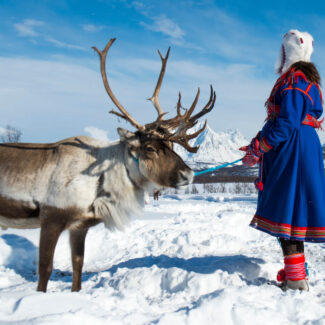
Several species of ungulate, or hoofed mammal, are found in the Arctic. The caribou or reindeer is the most widespread of these, certain herds of which are known for executing the longest migrations of any terrestrial mammal on Earth. The caribou’s bigger, bulbous-nosed cousin, the moose—the biggest member of the deer family—is also sometimes seen north of the tree line. And meanwhile the Arctic has its own bovid, the luxuriously hirsute muskox, sightings of which summon the bygone ecosystem of the Pleistocene ice ages.
From the rugged tundra to the ice-brushed plains, reindeer are a constant symbol of the Arctic’s enduring spirit. Observing these masters of the North in their natural environment is a true highlight of any polar expedition.
Aquatic Arctic Animals
This category umbrellas together a huge array of species, including both marine and freshwater animals. We’re talking everything from krill, copepods, and Arctic sea jellies (yes, there are jellyfish in the Arctic!) to enormous cetaceans.
Many species of fish are native to the Arctic, from grayling and whitefish in the rivers to a whole bevy of marine species in the Arctic Ocean and peripheral seas, including halibut, cod, herring, and pollock. Some Arctic fish are anadromous, which means they journey between marine and freshwater environments as part of their life cycle. These include a number of salmonid species—including the northernmost freshwater fish on Earth, the Arctic char—as well as many populations of Arctic lamprey. The biggest Arctic fish are the sleeper sharks, which include the Greenland shark and the Pacific sleeper shark, both of which can exceed 20 feet long and, despite a normally sluggish mode, are known to actively hunt seals and other large prey.
Pinnipeds are widespread and generally abundant in Arctic waters. They include a number of species of “ice seals,” such as the harp, ringed, and ribbon seals, which depend on sea ice for survival, as well as less-specialized seals, such as harbor and grey seals, that at least seasonally may visit Arctic waters. (Learn more about Arctic and sub-Arctic seals right here.) The biggest Arctic pinniped by far is the walrus, distinguished by its formidable tusks.
In the frigid waters of the North, even the smallest inhabitants are perfectly designed for survival. This harp seal pup represents the quiet beauty of an ecosystem where land and sea are inextricably linked.
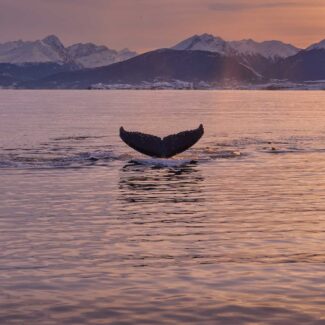
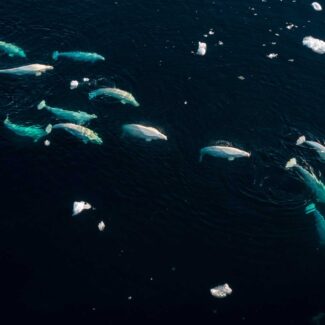
Cetaceans—whales and dolphins—are also a notable fixture of the Arctic ecosystem, and certainly a major attraction on many Arctic cruises. While an impressive variety of baleen whales, including humpbacks and blue whales, visit the Arctic in the summer to feed, only one is truly specialized for year-round living up here: the bowhead whale, which has the longest documented lifespan of any mammal. Two species of toothed whale, meanwhile, are also uniquely Arctic-adapted: the beluga—the beloved “white whale” widely exhibited in aquariums and oceanariums—and the narwhal, the “unicorn of the sea,” whose long spiral tusk sets it apart from any other cetacean. Bowheads, belugas, and narwhals are adept at navigating along, within, and under the Arctic pack ice, which offers them some protection from orcas, those top marine predators that seem to be expanding their presence in Arctic waters.
The sight of an orca surfacing against a backdrop of towering peaks is a powerful reminder of the Arctic’s raw majesty. These apex predators are the silent rulers of the deep, navigating a world of ice and tide.
Before we leave this extremely broad-stroked discussion of the Arctic’s aquatic creatures, we should note that North American and Eurasian river otters also penetrate above the Arctic Circle in some areas, serving as important freshwater predators wherever they’re found.
Arctic Birds
Birds contribute some of the most awe-inspiring wildlife spectacles in the Arctic, a global hotspot for nesting and feeding. The majority of birds are seasonal migrants, winging their way in great numbers to the Arctic tundra and coastal waters to nest and rear offspring amid the summertime bounty. These include dozens of species of shorebirds, seabirds, and waterfowl, from snow geese and tundra swans to shearwaters, murres, and the astoundingly far-traveled Arctic tern, which spends its life migrating between the Arctic and the Antarctic—a pole-to-pole wayfarer!
Seabird rookeries are a big reason why birdwatchers love Arctic cruises. Thronged “bird cliffs” are a sight to behold from Svalbard to the Canadian Arctic. More than half of the planet’s Atlantic puffins nest in Iceland, where the Vestmannaeyjar archipelago (the Westman Islands) harbors the single largest breeding colony of that species.
Affectionately known as the “clowns of the sea,” puffins bring a vibrant splash of color to the rugged northern cliffs. Watching these charismatic birds socialize in their colonies is a highlight for any Arctic birdwatcher.
Some plucky birds like the ptarmigan are year-round Arctic residents, though some species may make short-range migrations within the region for winter. These include the common raven as well as two superb avian predators: the snowy owl and the gyrfalcon, both of which are most definitely “bucket-list” goals for Arctic birding. Even some seabirds over-winter in the Arctic, including the gorgeous ivory gull.
You can read much more about Arctic birds in our dedicated guide to the Far North’s feathered clan. (And no, that feathered clan doesn’t include penguins.)
The silent flight of an owl over the frozen tundra is one of the Arctic’s most captivating sights. These master hunters perfectly embody the grace and stealth required to thrive in the world’s most extreme northern reaches.
Wildlife-Watching on an Arctic Cruise: Where & When to View Animals
Anywhere you travel in the Arctic, anytime during the cruise season, you’ve got the opportunity to see remarkable wildlife. But certain areas, and certain times of year, are especially fruitful or recommended for particular animal species and activity.
Some Notable Wildlife Destinations in the Arctic (& Subarctic)
- Svalbard: The Svalbard archipelago includes the island of Spitsbergen, known as the “Wildlife Capital of the Arctic.” Svalbard’s one of the best places in the world to see polar bears, which can be seen among the islands year-round. You’ve got great chances of spotting some of the archipelago’s diminutive reindeer, which are a distinct subspecies, as well as Arctic foxes, and meanwhile nesting seabirds and marine mammals, including belugas, are abundant.
- Iceland: Set on the doorstep of the Arctic Circle, Iceland offers outstanding birdwatching—including that centered on the aforementioned puffin rookeries—as well as first-rate whalewatching out of ports such as Reykjavíc and Húsavík.
- Northeast Greenland National Park: The world’s biggest and northernmost national park, this 375,000-square-mile sanctuary provides premier habitat for polar bears, muskoxen, Arctic wolves, walruses, and other megafauna.
- Canadian Arctic Archipelago: The islands, bays, and straits of the Canadian Arctic Archipelago compose some of the most important habitat in the world for such hallmark species as polar bears, belugas, narwhals, muskoxen, Arctic wolves, snowy owls, and Arctic foxes.
In the quiet corners of the high Arctic, survival is found in the smallest details. Selecting the right destination increases your chances of spotting these elusive masters of the snow in their natural element.
Some Seasonal Wildlife Highlights During the Arctic Cruise Window
- April – May: Possibility of seeing polar-bear cubs. Seals (including pups) hauled out on icebergs and pack ice. Walrus and whale migrations.
- June – August: Peak nesting season—large bird rookeries visible. Seasonal congregations of belugas and narwhals in coastal waters in the Canadian Arctic Archipelago. Chance of seeing young-of-the-year, from caribou and muskox calves to Arctic-fox kits. Coastal-foraging polar bears in Svalbard. Large walrus haul-outs in some areas.
- September – October: Chance of seeing birds and marine mammals on southward migration. Polar bears in certain Seasonal Ice Ecoregions (such as the Hudson Bay subpopulations) congregating along coasts awaiting spread of sea ice.
Journeying into the heart of the sea ice offers a rare opportunity to witness family life in the high Arctic. Knowing exactly where to look is the first step toward a transformative encounter with these polar icons.
The Arctic is a realm of endless biological wonder. Whether you’re scanning the tundra for the prehistoric silhouette of a muskox or surveying the horizon for the tell-tale blow of a bowhead whale, a voyage to the Far North offers a front-row seat to one of the most resilient and spectacular ecosystems on our planet.
Ready to witness the grandeur of the Arctic’s “Big 5” and the myriad creatures that call the polar reaches home? Explore our diverse range of Arctic cruises today and, with the help of our polar specialists, start planning your own wildlife expedition at the top of the world.

Bipolar Species: Which Animals Live At Both The North & South Poles?
A Guide To Arctic Plants: Surviving & Thriving In The Tundra
Arctic Food Web & Ecosystems Explained: From Tundra To Ocean
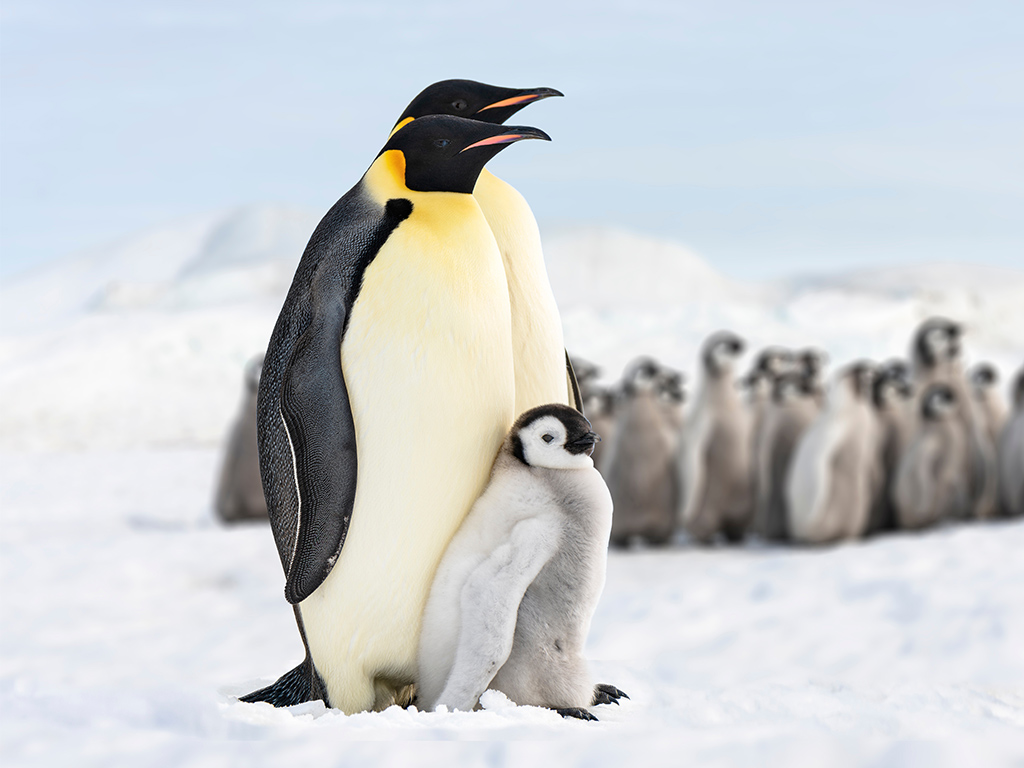
The Polar Paradox: Why Are There No Penguins In The Arctic?
Reindeer Revelations: 9 Captivating Caribou Facts

A Guide To Arctic Whales & Whalewatching On An Arctic Cruise
A Cruisegoer’s Guide To The Seals Of The Arctic & Sub-Arctic
No, I am the Walrus: 10 Whimsical Facts About Walruses

Twitching At The Top Of The World: A Guide To Arctic Birds
Disclaimer
Our travel guides are for informational purposes only. While we aim to provide accurate and up-to-date information, Antarctica Cruises makes no representations as to the accuracy or completeness of any information in our guides or found by following any link on this site.
Antarctica Cruises cannot and will not accept responsibility for any omissions or inaccuracies, or for any consequences arising therefrom, including any losses, injuries, or damages resulting from the display or use of this information.