














Inuit Words For Snow & The Arctic's Linguistic Diversity

It’s one of those supposed facts so frequently cited, and for so long, that it verges on “common knowledge.” We refer to the idea that Inuit people have 50—or 10, or 100, take your pick—words for snow. (And one still is probably more likely to hear the outdated and pejorative version: “‘Eskimos’ have 50 words for snow.”)
(It’s a firmly established-enough idea that it’s spread into pop culture. For instance, as the science writer David Robson pointed out in a New Scientist article, Kate Bush released an album in 2011 titled 50 Words for Snow.)

To the untrained eye, it is simply snow; however, for the cultures of the North, this frozen landscape is a complex tapestry described by a rich and highly specialized vocabulary.
The usual point in referencing this fact (if fact it is) is illustrating the contextual diversity of language and, really, the human experience. The idea is that a culture for whom a particular phenomenon or environmental feature is so familiar, formative, and intimately experienced will have a lot of nuanced terms for it. The implied flipside is that a lot of cultures aren’t so intrinsically bound to snow and therefore haven’t developed such rich terminology for it.
Well, here’s the deal: As the numerical slippiness suggests, this isn’t a statement with a terribly firm basis in fact. That’s not to say there’s not an element of truth to it, as we’ll get into. But the contention may trace originally to a reference to a few “Eskimo” snow terms made by the anthropologist Frank Boas in a 1911 work titled Handbook of American Indian Languages. In that context, Boas was comparing some Canadian Inuit snow words—aput (“snow on the ground”), qana (“falling snow”), piqsirpoq (“drifting snow”), and qimuqsuq (“snowdrift”)—with analogously independent and unrelated words in English describing liquid water in different forms (“lake,” “river,” “rain,” and the like). Boas himself didn’t suggest the Inuit language contained a noteworthy number of words for snow, it’s worth stressing; that wasn’t part of his point.
Various modern scholars have noted how, in the 20th century, this idea nonetheless appeared to morph into the insistence that the Inuit have many more words for snow than English and many other languages have—without ever citing a specialized authority in Inuit languages (not least an Inuit one).
We’ll return to the subject of snow and its linguistic dimensions in a little bit, but first let’s cover the rich mosaic of Arctic Indigenous languages and some of the very basic components of the Inuktitut branch that may have been part of the original “50 words for snow” claim.

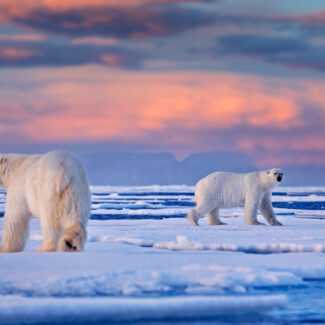
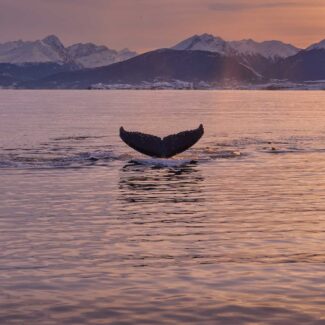
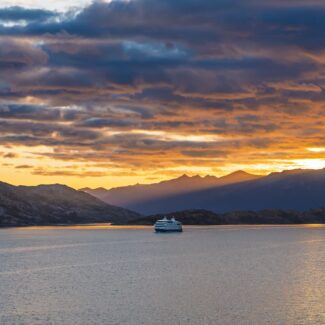
As the Arctic sun dips below the horizon, the shifting colors of the sky and the heavy “tykky” snow on the trees illustrate why a single word for snow could never suffice.
The Arctic’s Linguistic Diversity
With dozens of different ethnic groups dwelling around and above the Arctic Circle, it shouldn’t come as a surprise that there are an estimated 90-odd circumpolar languages and dialects. These range from Sámi, North Samoyedic, and Sakha in Eurasia to Inuvialaluktun and Kalaallisut in the North American Arctic. Indigenous tongues of the Arctic and Subarctic include many different branches within broadly defined linguistic families—Eskaleut, Na’Dene, Altaic, Paleo-Asian, and Uralic—as well as language isolates such as Ket and Yukaghir.
The diversity reflects the longtime occupation of Arctic latitudes by human beings who colonized them in different waves; the varying degrees of interrelatedness and cross-cultural contact among different groups; and the variety of ecosystems, environmental cycles, and human lifeways derived thereof found within the enormous Far North.
In the North American Arctic alone, a linguistic spectrum once ignorantly described (along with the peoples who spoke it) by outsiders as “Eskimo” includes no fewer than three different groups of Eskaleut languages, including Unangam Tunuu (Aleut) of the Aleutian, Being, and Pribilof archipelagos; Yupik, in the Russian Far East and western Alaska; and Inuit, spoken in northern Alaska, Canada, and Greenland. (It is worth noting that some authorities prefer the language-family term Inuit-Yupik-Unangan instead of Eskaleut.)
As mentioned, the related Inuit languages cover a vast region stretching from northern Alaska to East Greenland, and comprises a continuum of numerous dialect groups, with varying degrees of mutual intelligibility. These dialect groups include Inupiaq in Alaska and extreme northwestern Canada, Western Canadian Inuktun, Inuktitut in the central and eastern Canadian Arctic, and Kalaallisut or Greenlandic in Greenland. These groups, in turn, have their own dialects or subdialects.
To put it mildly, this points up the tenuous scaffolding on which “the Inuit have 50 words for snow” rests. Which Inuit language is being referred to—and which dialect and perhaps subdialect? And the tenuousness of such a statement only intensifies when you consider that the Inuit languages are polysynthetic.
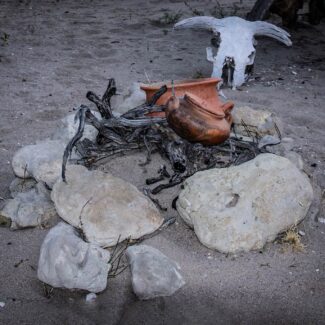
The nuances of the northern landscape are often hidden in plain sight, where the interplay of wind, ice, and organic matter creates a texture that Arctic languages uniquely define.
Inuktitut & Other Inuit Dialects as a Polysynthetic Language
What is a polysynthetic language? It’s an exceedingly complex one featuring words built out of numerous parts, or morphemes, in composite strings that may be very long. Those morphemes can sometimes be standalone words, but often are not.
The polysynthetic nature of Inuit languages allows for great versatility and virtually limitless possibilities for word-making by suffixing morphemes.
Inuit “Words for Snow”
Because of this linguistic complexity and flexibility, it’s hard indeed to put a firm number to words for snow in Inuit languages. Linguists have identified certain root words in Inuit languages specifically referring to the substance of snow. In most Inuit dialects there are four primary roots, qaniɣ (or qanik) means “falling snow,” aniɣu “fallen snow (more specifically, fallen snow for a particular use—namely to be gathered and melted into drinking water),” apun (or aput) “snow on the ground”, and piqsiq which refers to “wind-blown snow” (and, depending on the source, specifically snow so wind-flung that it appears to be falling “backwards” up into the sky).
Does that mean that, in these forms of the Inuit language, there are only four or so words for snow? Well, again, that depends on what you mean. The ability to build any number of words and phrases based on snow-word roots in the polysynthetic dialects of Inuit creates a “sky’s-the-limit” sort of situation. And there are certainly many other terms in Inuit languages referencing snow phenomena and features that aren’t directly connected to an explicitly snow-referencing root. The British linguist Geoffrey K. Pullum suggests that the widely used Inuit word kavisik means “snow with a herring-scale pattern on it caused by re-freezing of rain pockmarks on fallen snow,” yet “the root […] appears to mean ‘herring.'” In other words, it’s a snow descriptor that relies on a metaphorical foundation. Similarly, as Larry Kaplan, former director of the Alaska Native Language Center, notes in his article “Inuit Snow Terms: How Many & What Does It Mean?“, the Alaskan Inuit language Inupiaq, employs mapsa—which technically means “spleen”—to refer to snow cornices, those wind-built furls of snow that overhang ridges (in a spleen-like manner).
Drawing upon the Igloolik Oral History Project, the Nunavut Arctic College’s Anijaarniq project relates a slew of precise snow-related Inuit words, from qannippuq, which refers to falling snow, and qaniun, which means soft, fresh-fallen snow, to pukajaak, older snow covered by a fresher layer, and aqilluqqaaviniq, relating to longer-lying, hardened snow. The project also details terms classifying forms of wind-drifted snow that have metaphorical word-roots. Soft, rolling drifts piled in a snowstorm are called uluangnait, named for their resemblance to cheeks. Scoured by the northwestern wind (Uangnaq), these deposits become sculpted uqalurait—tongue-shaped drifts, uqaq meaning “tongue”—whose predictable orientation can help guide a traveler in low visibility or darkness. Runneled snowdrifts forming in the lee of some obstacle are called qimugjuk, “ridged.”
There’s also very rich Inuit terminology concerning ice specifically, a root-word for which in Inuktitut (as The Canadian Encyclopedia shares) is siku. A skim of ice is sikuaq, “small ice,” and a coat of ice forming on anything from water to a solid surface is sikuliaq, “made ice.”
The great extent, variability, and cultural importance of Arctic sea ice has, unsurprisingly, yielded rich descriptive language within Inuit dialects. The book SIKU: Knowing Ice—Documenting Inuit Sea Ice Knowledge & Use records close to 100 different Nunavik words for sea-ice types and phenomena.
There are plenty of interesting other linguistic references to specific forms of snow as well as ice among Inuit languages. As just one more example shared by the leading snow researcher Matthew Sturm in his Field Guide to Snow, the Inupiaq word silligruaq refers to the sheened glaze that melting and refreezing water forms on the surface of snow.
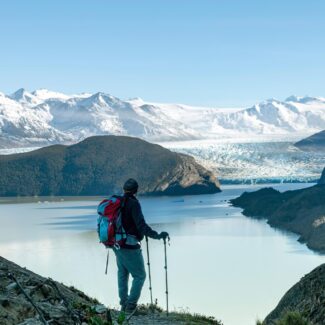
In the polysynthetic world of Inuktitut, a single complex word can describe this entire scene—the texture of the frozen sea, the wind on the slopes, and the precise state of the path ahead.
Nomenclatural Nuances From Living Close to Snow & Ice
Sturm points out that there’s an analogous word for silligruaq in the German language: firn-spiegel, which translates to “ice-mirror.” Indeed, the Inuit and other Arctic peoples aren’t the only cultures to have come up with nuanced ways to describe specific forms of frozen water. This, to be clear, isn’t a technical assertion concerning what constitutes a root word and linguistic interrelationships among different terms—just a celebration of the rich language that snow and ice have inspired in many parts of the world.
Consider the wind-sculpted corrugations of snow (commonly seen on wide-open, barren surfaces such as ice sheets and glaciers) called sastrugi, which originally derives from Russia. How about the bristling fangs of snow and ice best known from arid heights of the Andes known as penitentes, referencing a Spanish word for pointed white hoods of kneeling monks? Or, within the English language, the “suncups” that describe pockmarks on snow surfaces from differential melting; or the glittery “diamond dust” formed by windblown snow crystals in very frigid temperatures; or all of the slang and jargon sprung out of the snowsports world, such as powder, corn snow, sugar snow, “Cascade cement,” and the like?
Needless to say, as everything from a source of danger and discomfort to a building material, a playground, or simply a gorgeous physical phenomenon, snow has fueled quite the wonderful terminology, technical and non-technical alike, among human languages. And it’s a privilege to travel amid some of the great snow realms of the world—and the homeland of the Inuit peoples—on an Arctic cruise with us!
Living within a vast, monochromatic world forces an attention to detail; even the subtle mist and frost in the air are named, each signifying a vital piece of survival knowledge.
What the Svalbard Environmental Protection Act Means For Your Cruise

Role & Importance of AECO: The Association of Arctic Expedition Cruise Operators
Inuit Culture and the Living Heritage of the Frozen Frontier
Inuit Myths and the Sacred Lore of the Northern Seas
A Taste of the North: From Ancestral Inuit Diet to Gourmet
From Parkas to High Fashion: The Inuit Clothing Legacy
Mastering the Ice: Inventions of the Arctic Peoples
Ice & Earth: The Architectural Genius of the Arctic Peoples
Kayak Origins: The Arctic Invention That Changed the World
Disclaimer
Our travel guides are for informational purposes only. While we aim to provide accurate and up-to-date information, Antarctica Cruises makes no representations as to the accuracy or completeness of any information in our guides or found by following any link on this site.
Antarctica Cruises cannot and will not accept responsibility for any omissions or inaccuracies, or for any consequences arising therefrom, including any losses, injuries, or damages resulting from the display or use of this information.